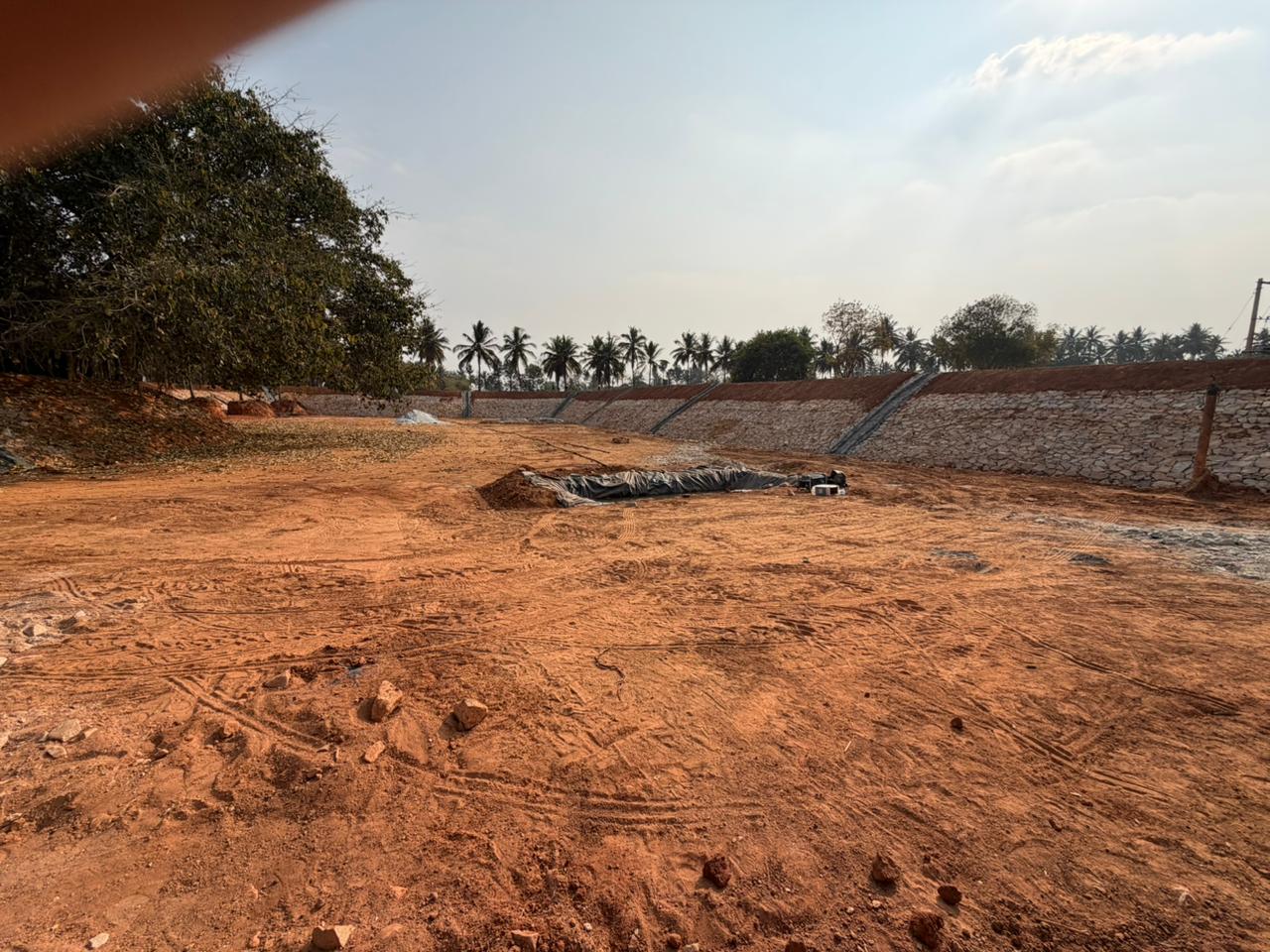
Location: Avathi Open Air Jail Campus, Karnataka
Thematic Area: Water Conservation & Environmental Sustainability
Key Partner: Collins CSR Team
Project Overview and Context
The Mini Lake Project at the Avathi Open Air Jail campus was undertaken by Vibhinna India Foundation as a strategic water conservation intervention to address the loss of rainwater from the campus. Previously, a significant volume of rainwater generated within the campus was flowing out into neighbouring areas, resulting in the loss of a valuable natural resource and limiting opportunities for groundwater recharge.
The project focused on creating a dedicated water-holding structure capable of capturing and retaining substantial quantities of rainwater within the campus. The lake was successfully developed and completed within three months, creating a long-term water conservation asset for the campus and its surrounding ecosystem.
Strategic Implementation and Methodology
The Mini Lake was developed with dimensions of approximately 100 metres × 40 metres × 5.5 metres, providing a total storage capacity of around 22,000 cubic metres, equivalent to approximately 2.2 crore litres of water at full capacity. The broader rainwater conservation potential of the intervention is estimated at approximately 2.5 crore litres, depending on annual rainfall and runoff conditions.
The project was implemented through systematic excavation, shaping and development of the lake area to enable rainwater collection and retention. The intervention was designed not only as a water storage structure but also as a natural recharge and ecological asset within the jail campus.
The three-month execution demonstrated an efficient project delivery model, combining technical planning, on-ground implementation and CSR-supported execution.
Stakeholder Collaboration and Community Engagement
The project was implemented with the support of the Collins CSR Team, whose contribution enabled the creation of a meaningful and sustainable environmental asset within the campus.
The initiative also provides opportunities for the involvement and engagement of inmates in maintaining and caring for the surrounding campus environment. By creating a greener and more water-secure campus, the project contributes to environmental awareness, a sense of responsibility and improved surroundings for the inmate community.
Impact Assessment and Measurable Outcomes
The Mini Lake Project is expected to generate significant environmental and social benefits:
Approximately 22,000 cubic metres of water storage capacity, equivalent to around 2.2 crore litres.
Potential conservation of approximately 2.5 crore litres of rainwater that would otherwise flow out of the campus.
Improved groundwater recharge, supporting the sustainability of approximately 8 borewells within the campus.
Enhanced water availability to support future campus expansion and infrastructure, potentially benefiting up to 2,000 inmates.
Creation of a sustainable water source for birds, insects and other local species, strengthening the campus ecosystem.
Improved green and ecological conditions within the campus.
Positive environmental and psychological benefits for inmates through improved access to a greener, more natural campus environment.
Reduction in the loss of rainwater to neighbouring areas and improved utilisation of locally available water resources.
Additional Mini Volunteer Grant Initiatives
Alongside the Mini Lake Project, the Collins CSR Team supported additional Mini Volunteer Grant interventions within the Avathi Open Air Jail campus. These complementary activities further strengthened the environmental and aesthetic value of the campus.
Orchard Development:
An orchard was created with more than 200 diverse saplings, contributing to long-term green cover, biodiversity and the potential availability of fruit-bearing trees within the campus.
Coconut Tree Painting:
Coconut trees across the campus were painted as part of a beautification and maintenance initiative. The activity contributed to improving the visual appeal of pathways and the overall campus environment, while also supporting better maintenance of the coconut trees and contributing to improved yield.
Overall Impact
The Mini Lake Project and associated Mini Volunteer Grant initiatives demonstrate how CSR investments can create long-term environmental assets while simultaneously improving community well-being. The lake addresses water conservation and groundwater recharge, while the orchard and campus beautification activities contribute to biodiversity, greenery and a more positive living environment.
Together, these interventions reflect Vibhinna India Foundation's approach of integrating water conservation, ecological restoration, biodiversity enhancement and community well-being into practical, scalable CSR projects.
Future Outlook and Scalability
The Avathi Mini Lake Project provides a replicable model for water conservation within institutional campuses, correctional facilities, educational institutions and other large land parcels where substantial rainwater runoff is available.
With appropriate hydrological assessment, similar interventions can be developed in other locations to capture rainwater, improve groundwater recharge, reduce dependence on external water sources and create ecological habitats. The integration of water conservation with plantation, biodiversity and volunteer-led activities further strengthens the overall sustainability of the model.
Next
Previous